
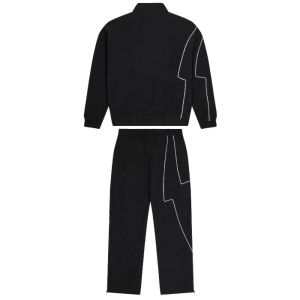
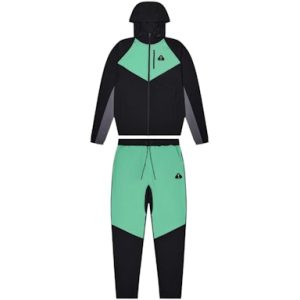
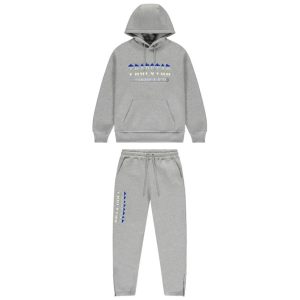
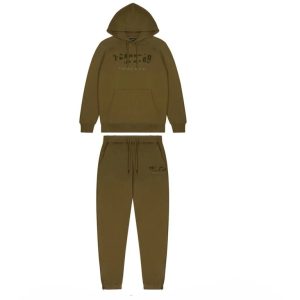
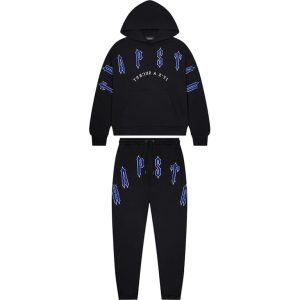
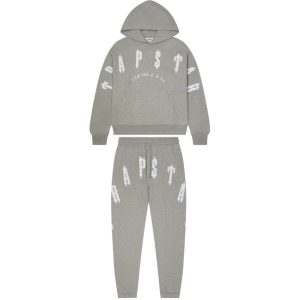
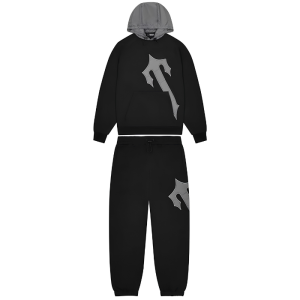
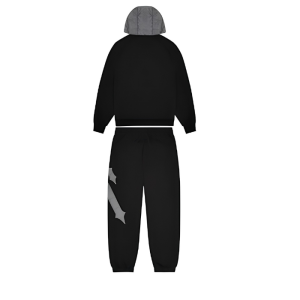
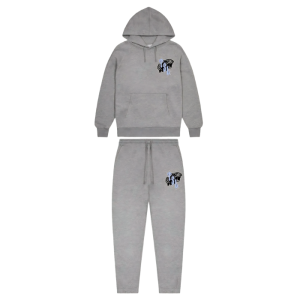
Why a Trapstar tracksuit is architecturally different from a matching hoodie and jogger
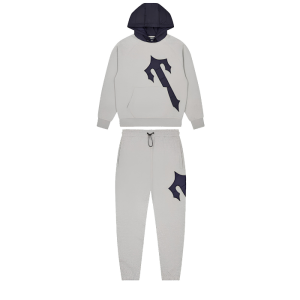
Buying a Trapstar hoodie and a Trapstar sweatpant separately — even in the same colourway name from the same season — does not produce a tracksuit. It produces two pieces that look similar. The difference between similar and identical is produced at the manufacturing level in ways that are invisible in a product photograph but immediately visible in outdoor conditions and over time.
Difference 1 — Dye lot
Cotton dye absorption varies between production batches based on temperature, dye concentration and liquor ratio — variables controlled within a tolerance range rather than to an exact point. A hoodie and a pant dyed in different batches will carry the same nominal colourway name but a slightly different actual colour — a difference visible under natural outdoor light that is invisible in indoor or artificial lighting. Tracksuit pieces are produced in the same dye batch: both garments enter the same dye bath under the same conditions and exit with genuinely identical colour. This cannot be approximated by buying pieces separately.
Difference 2 — Fabric weight within spec
Trapstar uses 350–400 GSM heavyweight fleece — a specification range rather than a fixed point. A hoodie from a 390 GSM batch and a pant from a 360 GSM batch are both within the same specification range but have different physical weights and different drape characteristics. The heavier hoodie hangs with more authority and resists body heat differently from the lighter pant. Wearing them together means the two pieces move differently. Tracksuit pieces are cut from the same fabric batch: both garments have the same weight, the same hand feel, and they move together because they are literally the same material.
Difference 3 — Proportional geometry
The Trapstar tracksuit hoodie and pant are patterned against each other — the hoodie's body width and length are calibrated to the pant's waistband height and leg width to produce a specific silhouette relationship between the two pieces when worn together. The hem of the hoodie sits at the correct position relative to the pant waistband. The shoulder width of the hoodie reads correctly against the leg opening of the pant. These proportional relationships are designed into the pattern of the set. They cannot be reproduced by combining individually purchased pieces whose patterns were not designed against each other.
How to read a correctly constructed Trapstar tracksuit pant
The tracksuit pant is where the construction quality of a set is most legible — more seams, more stress points, more opportunities for the construction to demonstrate its standard. A correctly constructed Trapstar tracksuit pant has specific seam treatments at every critical point that a cheaper competing piece will not have.
Inseam
Inner leg seam
Flat-lock stitching — two parallel rows that press the seam flat against the fabric surface rather than creating a raised ridge. At 350–400 GSM heavyweight fleece, a raised overlock seam on the inner leg creates friction and pressure against the inner thigh during walking. Flat-lock eliminates this by keeping the seam surface below the surrounding fabric plane. This is a construction detail that a buyer cannot see when the pant is on a hanger but feels immediately during extended wear.
Crotch seam
Highest stress point
Flat-lock with additional bar tack reinforcement at the front and back crotch points — the specific locations where the two inseam panels join the two outseam panels. These four junctions are the highest mechanical stress points in a sweatpant under hip flexion loading. Bar tack reinforcement at these points — a dense horizontal stitch formation that concentrates multiple thread passes across a small area — distributes the stress load that would otherwise concentrate entirely in the primary stitch at each junction point.
Waistband
Retention and comfort
Double-layer construction with a separate interior elastic channel — the elastic sits within its own enclosed channel rather than being sewn directly to the outer fabric face. Direct elastic-to-fabric contact at a single-layer waistband causes the outer fabric to pucker and fold along the elastic contraction line within months of regular washing. The double-layer construction keeps the outer waistband face flat and smooth regardless of how many wash cycles the garment has accumulated. The drawstring exits through bar-tack reinforced eyelets that resist the tearing force repeated pulling creates at the exit point.
Ankle rib
Cuff definition
2x2 rib with 4–5% elastane content — higher elastane content than standard issue tracksuits to maintain return tension and cuff shape definition through the extended wash cycles and mechanical stress that a heavyweight tracksuit pant accumulates over its life. The Decoded 2.0 update increased the elastane content in both the pant ankle rib and the hoodie cuff rib to address shape degradation that early buyers reported after 18–24 months of regular wear on the original Decoded construction.
Outseam pockets
Pocket opening stress
Bar tack reinforcement at both the upper and lower pocket opening points — the two points where the pocket bag attachment meets the outseam panel. Pocket openings on heavyweight sweatpants are under significant mechanical stress from hand insertion and item weight in the pocket during wear. Bar tack at both opening points prevents the pocket bag from separating from the outseam panel at the stress concentration points — the most common structural failure mode on lower-specification sweatpant pockets.
The Trapstar tracksuit in British streetwear culture — why the set matters here specifically
The matching tracksuit occupies a different cultural position in British streetwear than it does in American streetwear. In the US, the matching set is primarily a convenience and aesthetic choice — a way to achieve a coordinated outfit without the effort of pairing individual pieces. In British culture, particularly in the urban environments that produced Trapstar, the matching tracksuit is a specific cultural marker that communicates membership in a particular community and aesthetic tradition with an immediacy that individual pieces do not.
This cultural weight of the tracksuit in the UK has its roots in a tradition that predates streetwear as a commercial category — the full matching set as the default daily wear for a significant section of urban British youth culture across the 1980s, 1990s and 2000s, worn in the specific social environments where the music and fashion that produced brands like Trapstar was made. The Trapstar tracksuit did not adopt this cultural tradition from outside it — it emerged from within it. The founders who sold T-shirts from the boot of a car in West London in 2005 were part of the same culture that wore matching tracksuits as its everyday clothing.
The consequence for the Trapstar tracksuit buyer outside the UK is that the piece carries a cultural specificity that goes beyond its construction quality and its graphic language. Wearing a Trapstar Decoded tracksuit in Manchester or South London is a statement that reads completely within its cultural context. Wearing it in New York, Dubai or Lagos is a statement about cultural awareness — knowing what the piece means in its origin context and choosing to carry that meaning into a different environment. Both are valid. The tracksuit communicates at both levels simultaneously.
Decoded tracksuit vs Shooters tracksuit — two different outfit registers
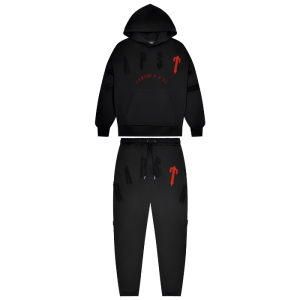
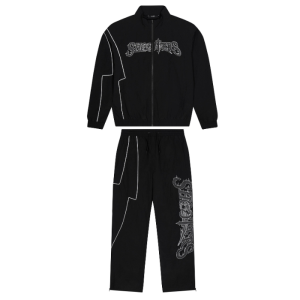
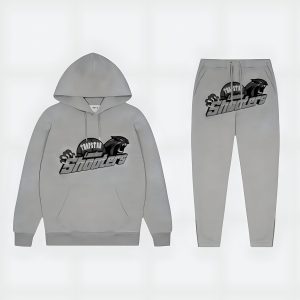
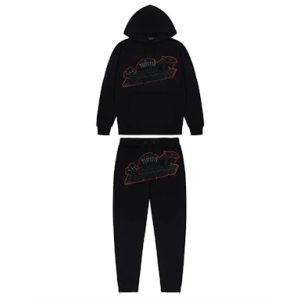
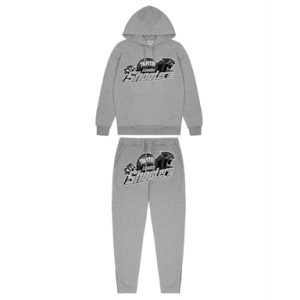
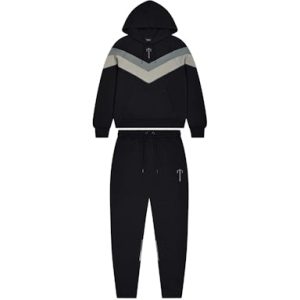
Trapstar produces tracksuits in distinct graphic series. The two most significant — Decoded and Shooters — occupy different positions in the brand's visual identity spectrum and communicate different things about the wearer's relationship to the brand.
Sizing a Trapstar tracksuit — both pieces at once, always the same size
The Trapstar tracksuit is designed as a proportional set — the hoodie and pant patterns are calibrated against each other at each size. Buying the hoodie and pant in different sizes disrupts the proportional relationship the set was designed to maintain — a larger hoodie with a standard pant creates top-heavy imbalance, a larger pant with a standard hoodie creates bottom-heavy imbalance. Order the same size in both pieces without exception.
Trapstar follows British sizing conventions — consistent across the full range. The sizing guidance from the hoodie page applies directly to the tracksuit: if you wear a medium in Hellstar or Essentials for the oversized look, order XL in the Trapstar tracksuit. Standard retail medium for a relaxed Trapstar fit means ordering L in the tracksuit. Standard size for a fitted look that still reads as correct Trapstar proportions.
| Size | Hoodie chest | Pant waist (with drawstring) | Leg opening | Hoodie length |
|---|---|---|---|---|
| S | 38" | 26–30" | 16" | 27" |
| M | 40" | 28–32" | 17" | 28" |
| L | 42" | 30–34" | 18" | 29" |
| XL | 44" | 32–36" | 19" | 30" |
| XXL | 46" | 34–38" | 20" | 31" |
Size up one across both pieces if you plan to wear the tracksuit over a base layer thicker than a T-shirt — the hoodie needs room to accommodate a thin knit or long-sleeve underneath without pulling at the chest, and the pant's double-layer waistband provides 3–4 inches of waist adjustment within each size to accommodate natural variation.
Caring for a Trapstar tracksuit — washing both pieces together matters
The most important care instruction specific to the tracksuit — as opposed to individual pieces — is to wash both the hoodie and the pant together in the same cycle every time. Cotton dyes fade at a rate determined by the number of wash cycles and the conditions of each cycle. If the hoodie is washed more frequently than the pant, or at different temperatures, the two pieces accumulate different wash histories and begin to diverge in colour. The dye lot match established at production unravels wash by wash until the two pieces read as similar rather than identical.
Machine wash cold, both pieces together, turned inside out, on a gentle cycle. Cold wash preserves the dye molecules' bond to the cotton fibre surface — higher temperatures accelerate dye release, which is why garments washed in warm or hot water fade faster than those washed cold. Turning inside out protects the chenille embroidery surface from drum contact on the Decoded set and protects the screenprint graphic surface on the Shooters set from abrasion against the drum and other garments during agitation.
Use a colour-safe detergent without optical brightening agents. OBAs — compounds that deposit on the fabric surface and re-emit UV radiation as blue-white visible light — shift the surface appearance of grey and black Trapstar pieces toward a cooler, blue-tinted tone over multiple wash cycles. The grey Decoded tracksuit is particularly sensitive to OBA shift — the warm neutral grey of the original colourway becomes progressively cooler and less warm with each OBA-containing wash cycle. Colour-safe detergents without OBAs are specifically formulated to clean without this colourway shift.
Air dry both pieces together under the same conditions. Do not tumble dry either piece. Store both pieces together — folded in the same drawer or on the same shelf — so they experience the same light exposure and fade at the same rate during storage. Two pieces fading at the same rate remain matched. Two pieces fading at different rates diverge. The set you bought is only a set for as long as you maintain it as one.
Frequently asked questions about Trapstar tracksuits
What is the difference between the Decoded and Shooters Trapstar tracksuit?
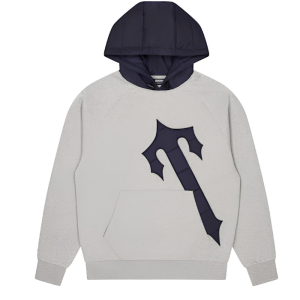
The Decoded tracksuit uses chenille embroidery for the Irongate arch — a raised, velvety physical graphic that reads as restrained at street distance and reveals its construction quality at inspection distance. The Shooters tracksuit uses full screenprint — the Shooters visual language at maximum scale across both chest and back panels, immediately graphic from any viewing distance. Same heavyweight fleece base and construction spec. The difference is entirely in what each communicates and at which viewing distance it communicates it.
Can I buy the Trapstar tracksuit hoodie and pant separately?
The hoodie and pant are available as individual pieces in the hoodies range and as a set in the tracksuits range. Buying them as a set from the same production run guarantees dye lot matching, fabric weight matching from the same batch, and proportional geometry calibrated between the two pieces. Buying them individually from different production runs means the colourway match is nominal rather than exact, the fabric weight may vary within the specification range, and the proportional relationship between the two pieces is approximated rather than designed.
Why should I wash both pieces of the tracksuit together?
Cotton dyes fade at a rate determined by wash frequency and conditions. If the hoodie and pant accumulate different wash histories — different numbers of cycles or different temperatures — they begin to diverge in colour. The dye lot match established at production unravels cycle by cycle. Washing both together in the same cold gentle cycle every time ensures they fade at the same rate and remain matched. The same principle applies to drying and storage — same conditions for both pieces, always.
What size should I order in a Trapstar tracksuit?
Order the same size in both pieces — the tracksuit is designed as a proportional set and different sizes in the two pieces disrupt the intended silhouette relationship. Trapstar follows British sizing conventions: narrower than intentionally oversized US brands at equivalent label sizes. If you wear M in Hellstar or Essentials for the oversized look — order XL in the Trapstar tracksuit. Standard retail M for a relaxed Trapstar fit — order L. Size up one across both pieces if layering over a base layer thicker than a T-shirt.
Is the Trapstar tracksuit limited edition?
Core tracksuits — the Decoded in Lux Grey, the Shooters in black — are reproduced across seasons with minor dye lot variation between each season's production run. Seasonal and capsule tracksuits are produced in specific quantities tied to their production run and are not reproduced once they sell through. The Decoded 2.0 is the current version of the core tracksuit — constructed to the improved specification rather than as a seasonal limited piece. Seasonal colourways of the Decoded and Shooters — dusty pink, sage, navy — exist only within their specific production run.
What footwear works with the Trapstar tracksuit?
The Trapstar tracksuit pant has a tapered or straight leg depending on the specific series — narrower at the ankle than the Sp5der or Hellstar wide-leg sweatpants. The tapered ankle creates a different footwear relationship: the shoe needs to be visible below the hem rather than framed by a wide leg opening. Clean white trainers, classic court shoes or lifestyle sneakers work correctly. Chunky trainers create a visual imbalance where the shoe competes with the narrow hem rather than completing it. The ankle rib of the pant sits at or above the shoe collar, which means the shoe and the pant should coordinate in formality level — a trainer at the same level of casualness as the tracksuit rather than a formal shoe that creates a contextual mismatch.
The tracksuit is not two pieces. It is one outfit.
Same dye batch. Same fabric weight. Same production run. Patterns designed against each other. The Irongate arch on both the hoodie and the pant, from shoulder to ankle, as a single continuous statement.
Fragment Clothing stocks the complete Trapstar tracksuit range — Chenille Decoded 2.0, Shooters, Hyperdrive and Foundation sets. Complete the wardrobe with individual hoodies, jackets and T-shirts. Shipped worldwide.