
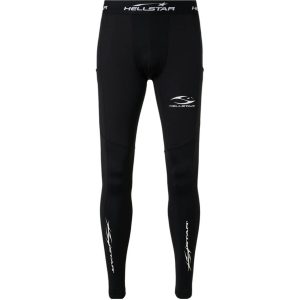
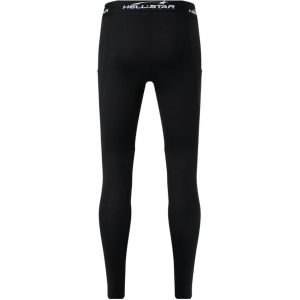
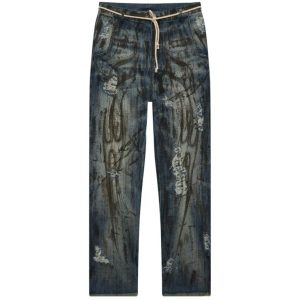
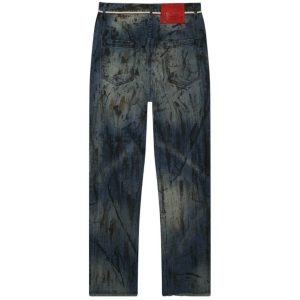

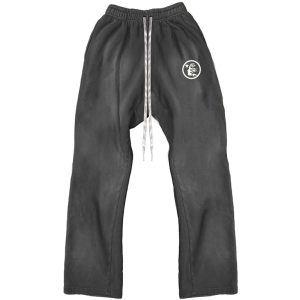
The airbrushed Hellstar sweatpant — what makes it technically distinct
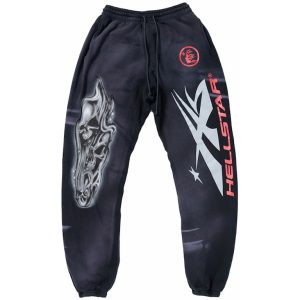
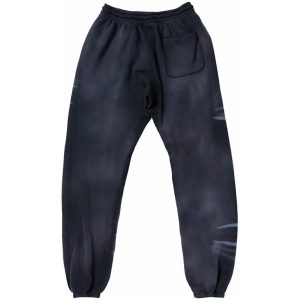
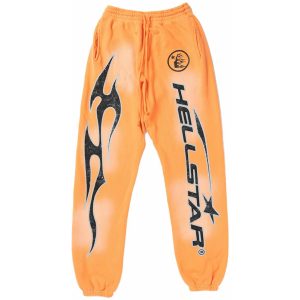
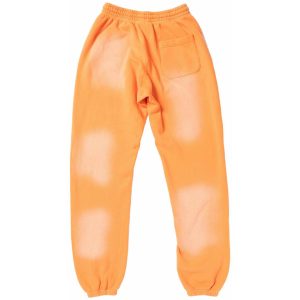
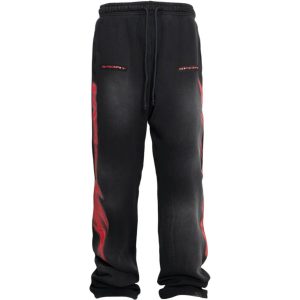
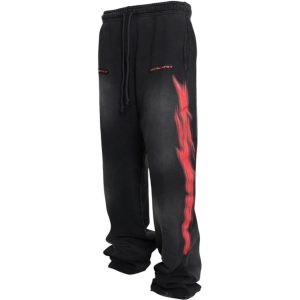
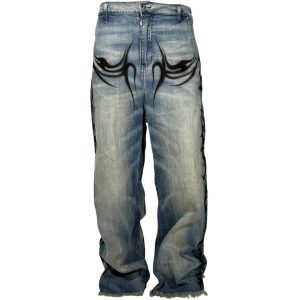
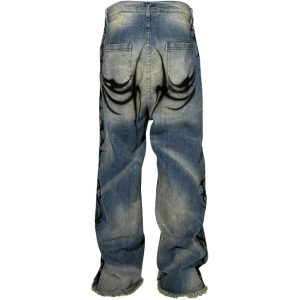
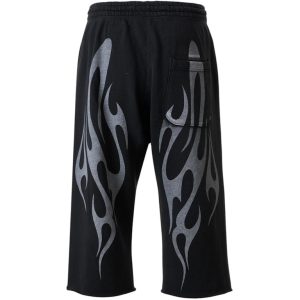
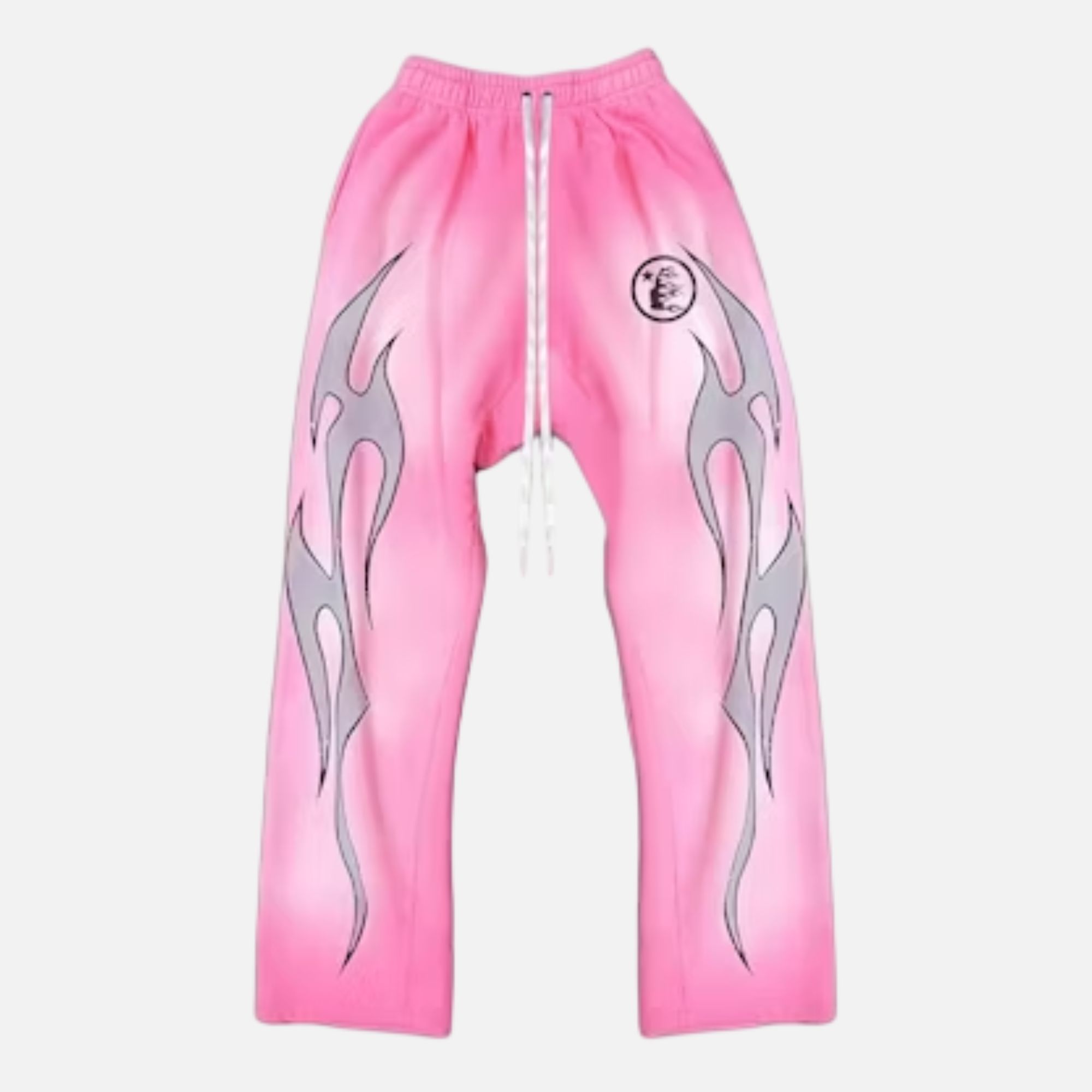
The airbrushed skull sweatpant is the most technically demanding piece in the Hellstar bottom-weight range — and the most misunderstood. Most buyers who see the gradient graphic effect on the leg panel assume it is a printing method applied by machine. It is not. Airbrushing on fabric is a manual technique where a compressed-air atomiser delivers pigment or dye in a controlled spray pattern determined by the operator's hand movement, distance from the fabric surface, and air pressure setting. No two airbrushed pieces are exactly identical because the human variable in the process makes precise replication impossible.
The visual result — smooth colour transitions from dark to light, gradient effects that fade across the leg panel — is physically impossible to achieve with screen printing or heat-transfer methods. Screen printing produces hard graphic edges where the ink meets the unprinted fabric. Heat-transfer vinyl produces a defined boundary at the edge of the cut vinyl shape. Neither method can produce the seamless colour fade that airbrushing creates because both require a fixed boundary between the printed and unprinted areas. Airbrushing has no such boundary — the spray fades out gradually as the operator increases the distance or reduces the pressure at the graphic edge.
On a 380–400 GSM heavyweight fleece, the airbrush medium — typically a fabric-specific textile paint or reactive dye — penetrates the surface fibres of the cotton loop structure rather than sitting above the fabric the way plastisol does. This penetration means the airbrushed graphic is more resistant to the surface abrasion that damages screen-printed graphics, but more sensitive to the chemistry of the detergent used in washing — because the dye is within the fibre rather than above it, alkaline detergents and bleach agents can break the dye-to-fibre bond and fade the gradient effect faster than would occur on a plastisol graphic.
The skull graphic on the Hellstar airbrushed sweatpant is positioned at the lower leg — approximately at mid-thigh to knee, depending on the specific piece and the wearer's height. This placement is intentional: the leg graphic is designed to be visible when the sweatpant is worn in a wide-leg silhouette where the fabric billows slightly at the lower leg rather than being tucked into a sock or hidden beneath a trainer. The graphic exists to be seen in motion, which is why its position on the leg is calibrated for visibility during normal walking rather than for a static photograph.
Midnight Dye Black — what the colourway actually is
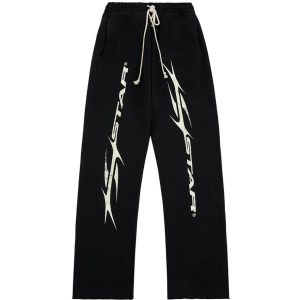
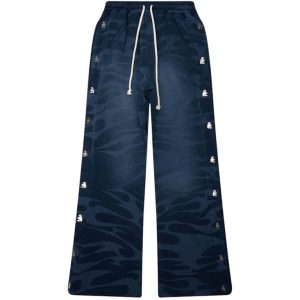
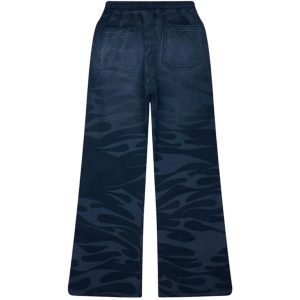
The Midnight Dye Black colourway on the Hellstar airbrushed sweatpant is not a standard black. It is a garment-dyed black — a dyeing process applied to the fully constructed sweatpant rather than to the yarn or fabric before construction. The distinction produces a colourway that is visually distinct from piece-dyed black in three specific ways that are immediately apparent once you understand what to look for.
First — depth. Garment-dyed black absorbs dye unevenly across the constructed garment because the seam areas, waistband and ankle rib absorb the dye differently from the flat body panels. The seam areas and ribbed sections typically absorb more dye than the flat panels, producing a slightly darker tone at the seams and ribs that gives the garment a visual dimensionality that flat piece-dyed black does not have. The garment does not appear uniformly flat black — it appears as a black with subtle tonal variation that reads as depth rather than inconsistency.
Second — softness. The garment-dyeing process involves the constructed sweatpant being tumbled in the dye bath for an extended period — typically two to four hours at the appropriate temperature for the dye type. The mechanical tumbling action during dyeing softens the cotton fibres in the same way that stone-washing softens denim — the fibre surfaces develop a slightly abraded texture that feels softer to the hand than undyed or piece-dyed cotton at the same GSM. A Midnight Dye Black Hellstar sweatpant feels softer out of the bag than a standard piece-dyed black sweatpant at the same fabric weight because the garment-dyeing process has effectively broken in the fibre surface before the garment reaches the buyer.
Third — fade character. Garment-dyed black fades differently from piece-dyed black. Piece-dyed black fades gradually and uniformly — the overall colour lightens evenly across the fabric surface over wash cycles. Garment-dyed black fades unevenly — the flat body panels fade slightly faster than the seam areas and ribs, which means the tonal depth variation that made the garment visually interesting when new becomes more pronounced as it ages rather than disappearing. The Midnight Dye Black Hellstar sweatpant looks different at six months of wear than it does on day one, but in a way that reads as worn-in character rather than colour degradation.
Leg graphics on sweatpants — why placement is a design decision not an afterthought
A graphic on a sweatpant leg operates under completely different visual conditions from a graphic on a T-shirt chest or hoodie back panel. The chest and back panel graphics on the Hellstar hoodie are on surfaces that are predominantly vertical and relatively static during normal wear — they face the same direction and read at the same angle throughout the day. A leg graphic is on a surface that moves constantly, rotates through multiple angles as the wearer walks, and alternates between full visibility and partial concealment as the leg swings through its stride cycle.
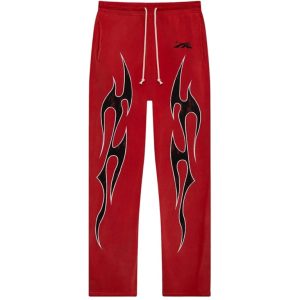
Hellstar places leg graphics at the outer thigh rather than the inner thigh or the calf because the outer thigh is the face of the leg that is most consistently visible from a standing position at conversational distance. The graphic at the outer thigh is visible from the front at an angle, from the side directly, and from three-quarter angles — it disappears only from directly behind the wearer, which is the least common position for a viewer in a social context. Inner thigh placement would hide the graphic during walking as the legs cross. Calf placement would position the graphic at the lowest point of the leg where it is most likely to be obscured by footwear or visually absorbed into the shoe-ankle relationship.
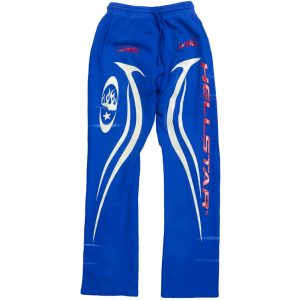
The scale of the leg graphic is calibrated to the wide-leg silhouette of the Hellstar sweatpant. A wide-leg cut provides more lateral fabric at the thigh than a tapered cut — the graphic has a wider canvas at its placement position. The skull graphic on the airbrushed piece spans the full width of the outer thigh panel at its widest point, which means the graphic reads at its intended scale only when the wide-leg silhouette is maintained. Tucking the sweatpant into a sock or compressing the ankle would distort the fabric geometry of the lower leg and reduce the apparent scale of the thigh graphic by pulling fabric tension upward through the leg. Wear the Hellstar sweatpant as it is designed — ankle loose, wide-leg reading correctly.
Hellstar sweatpant construction — waistband, crotch seam and ankle rib
The Hellstar sweatpant uses a construction specification consistent with the brand's heavyweight fleece approach across all garment categories. The waistband uses a double-layer construction — the outer cotton fleece panel and an internal elastic channel that keeps the elastic separated from the outer fabric face. This prevents the outer fabric from puckering along the elastic contraction line that single-layer waistbands develop within months of regular washing. The drawstring exits through bar-tack reinforced eyelets — the bar tack stitch concentrating multiple thread passes across the eyelet boundary to resist the tearing force that repeated drawstring pulling applies to the fabric at the exit point.
The crotch seam uses flat-lock construction — two parallel rows of stitching that press the seam flat against the fabric surface rather than creating a raised ridge. At the heavyweight fleece weight Hellstar uses, the crotch seam experiences the highest mechanical stress in the garment during hip flexion movements — sitting, crouching, stair climbing. A raised overlock seam at the crotch of a heavyweight sweatpant concentrates all mechanical stress in a single stitch row that fatigues faster under repeated loading. The flat-lock seam distributes that stress across two rows and keeps the seam from creating friction against the inner thigh during wear.
The ankle rib uses 2x2 ribbing with a 3–5% elastane content — the same rib specification appropriate for a heavyweight garment where the ankle cuff needs to sit with structural definition rather than compressing against the ankle. The Hellstar sweatpant's wide-leg silhouette means the ankle rib is not under the same circumferential stretch demand as a tapered sweatpant rib — the wide leg falls to the ankle without the inward taper that would require a tighter, more elastic rib to maintain position. The 2x2 rib at this width is structural rather than compressive — it gives the ankle hem a defined edge that holds the wide-leg shape correctly rather than causing the hem to flare or collapse outward at the ankle opening.
The full Hellstar outfit — why the pants matter as much as the hoodie
The Hellstar brand's visual identity operates at the level of the complete outfit, not the individual piece. The back panel graphic on the hoodie reads across the full width of the back from shoulder to hem. The leg graphic on the sweatpant reads across the full width of the outer thigh. Both graphics are designed for the scale of the garment they are placed on — and both require the other piece to be equally considered for the complete outfit to read as Hellstar rather than as a Hellstar piece worn with something else.
The practical consequence: when buying a Hellstar hoodie, look at which sweatpant is available in the same graphic series. Records hoodie — Records sweatpant. Studios hoodie — Studios sweatpant. Airbrushed hoodie — Midnight Dye airbrushed sweatpant. The dye lot between the hoodie and the sweatpant in a matched capsule run is controlled at the production level — the same black base, the same midnight dye process, the same graphic series applied to both garments simultaneously. Buying them together means the outfit is resolved. Buying them separately from different production runs means the colourway relationship between the two pieces is approximated rather than precise.
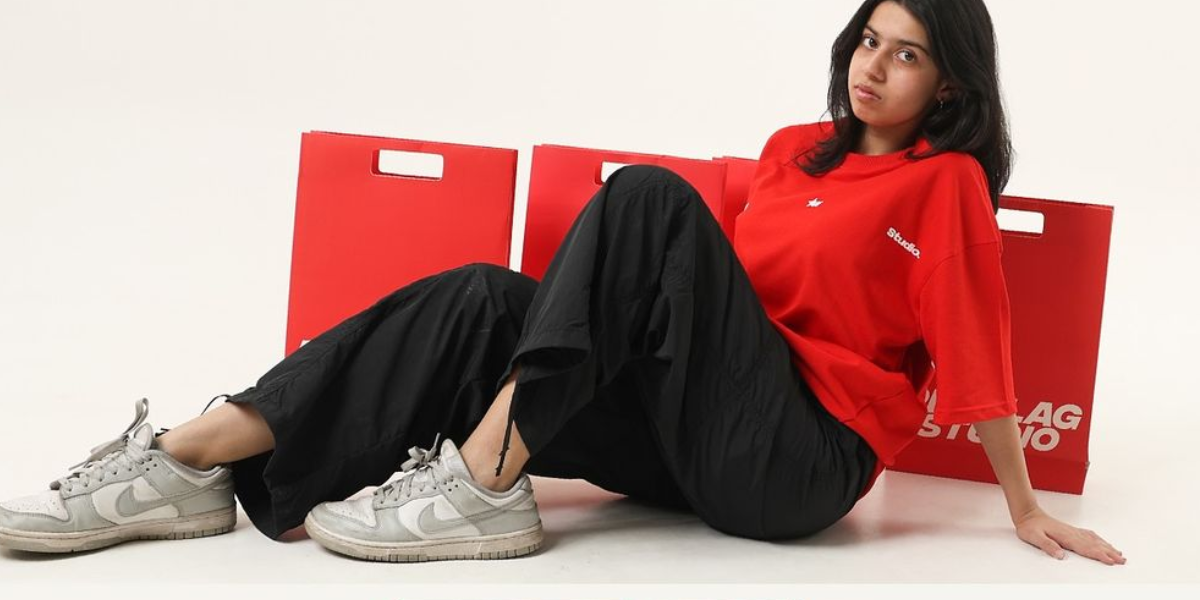
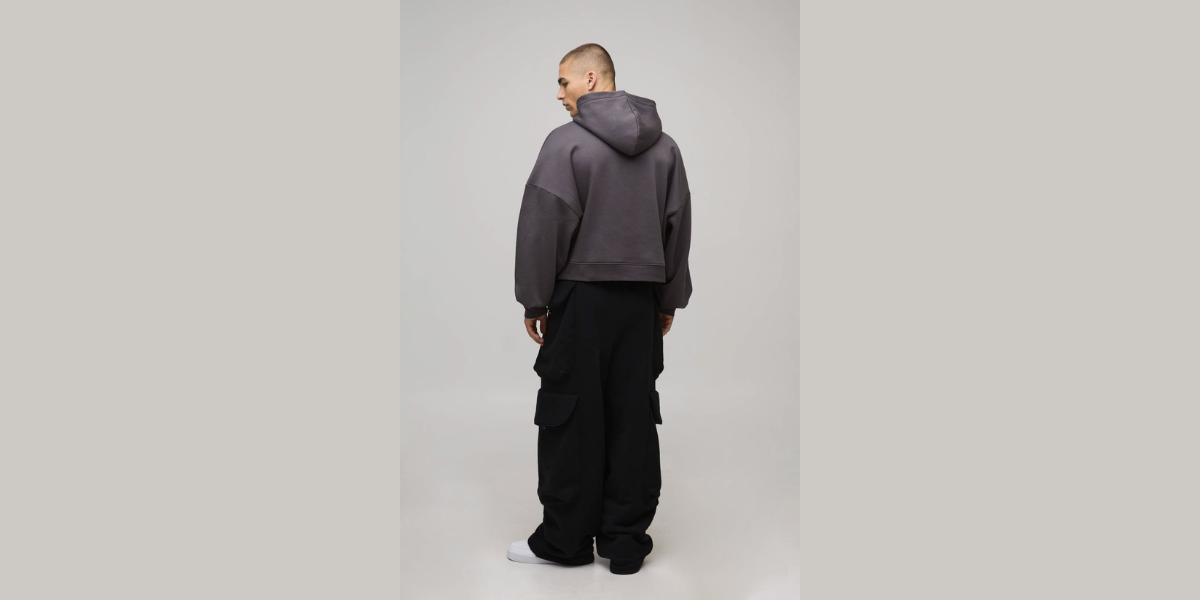
The footwear decision for the Hellstar sweatpant is determined by the ankle treatment. The wide-leg silhouette reads correctly over a chunky trainer or any shoe with enough visual mass to frame the leg opening — the foot and shoe should have enough physical presence that the leg opening of the wide-leg sweatpant visually rests above it rather than consuming it. A thin, low-profile sneaker under the Hellstar wide-leg disappears beneath the fabric and makes the outfit look as though the pants have no terminus — the leg just ends at the ground with nothing below it. A trainer with sole height and volume gives the outfit its visual anchor point at the foot.
Sizing Hellstar sweatpants — same logic as the hoodie, one additional consideration
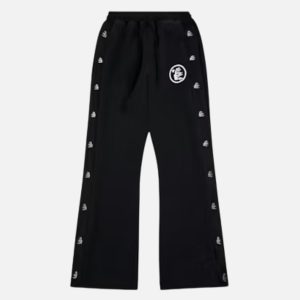
Hellstar sweatpants run wide through the leg at every size — the wide-leg cut is designed into the pattern across the full size range, not just at larger sizes. Order the same size in the sweatpant as in your Hellstar hoodie. The double-layer waistband with independent drawstring provides 2–3 inches of waist adjustment within each size, so the pant accommodates natural waist variation without requiring a different size from the hoodie.
If buying with a hoodie
Order the same size in both. The proportional relationship between the hoodie's dropped shoulder width and the sweatpant's wide-leg width is calibrated for a same-size relationship. A hoodie one size larger than the pant creates top-heavy imbalance. A pant one size larger than the hoodie creates bottom-heavy imbalance.
If buying as a standalone
Order your standard waist size — the drawstring handles fine adjustment within each size. If between sizes, order up rather than down. At 380–400 GSM the sweatpant has enough fabric mass that sizing down one produces a noticeably narrower leg opening that compresses the wide-leg silhouette the brand intends. Size up and use the drawstring to adjust the waist.
Caring for Hellstar sweatpants — dye preservation and airbrushed graphic maintenance
The Midnight Dye Black colourway requires care practices oriented around preserving the garment-dye's characteristic depth and tonal variation rather than simply maintaining a flat black. Standard black garments are typically washed inside out to slow general colour fading — that instruction applies here, but for the Midnight Dye piece there is an additional consideration around detergent chemistry.
Avoid detergents with optical brightening agents (OBAs). OBAs deposit compounds on the fabric surface that absorb ultraviolet light and re-emit it as visible blue-white light — this is what makes white and light-coloured fabrics appear brighter. On a black garment, OBAs shift the surface colour toward a blue-grey cast over multiple wash cycles because the blue-white emission from the OBA deposit competes visually with the deep black of the dye beneath it. A Midnight Dye Black Hellstar sweatpant washed repeatedly with OBA-containing detergent begins to read as a cold, slightly blue-tinted black rather than the rich, deep black of the garment-dye process. Use a colour-safe detergent without OBAs — products marketed specifically for dark or black garments are typically OBA-free by formulation.
For the airbrushed graphic specifically — the textile paint or reactive dye used in the airbrush medium is fixed in the fabric fibres by a heat-setting step during production. This dye-fibre bond is stable under cold washing but can be weakened by alkaline detergent chemistry over repeated cycles. Alkaline conditions disrupt the dye-to-fibre bond by altering the charge relationship between the dye molecule and the cotton hydroxyl groups it has bonded to. Standard household detergents run mildly alkaline at pH 8–9 — technically within the range that does not damage cotton fibres but at the upper end of what reactive dyes tolerate across many wash cycles. A pH-neutral or gentle detergent extends the airbrushed graphic's colour fastness significantly.
Machine wash cold on a gentle cycle, inside out. Air dry flat — do not tumble dry at any heat setting. The Midnight Dye Black colourway is more sensitive to heat than a standard piece-dyed black because the garment-dye process that softened the fibre surface during production also reduced the fibres' thermal stability margin slightly relative to undyed cotton. Cold wash and flat air dry every time — the colourway and the airbrushed graphic both benefit from the same low-intervention care protocol.
Frequently asked questions about Hellstar pants
What makes the airbrushed Hellstar sweatpant different from other graphic sweatpants?
The gradient graphic effect on the airbrushed Hellstar sweatpant is produced by manual airbrush application — a compressed-air atomiser delivering textile paint in a controlled spray pattern determined by a human operator's hand movement and pressure settings. No two pieces are exactly identical. The smooth colour transition from dark to light across the skull graphic is physically impossible with screen printing or heat-transfer methods — both require a defined boundary between printed and unprinted areas. Airbrushing has no such boundary, which is what produces the seamless fade effect.
What is Midnight Dye Black and why does it look different from standard black sweatpants?
Midnight Dye Black is a garment-dyed black — the dye is applied to the fully constructed sweatpant rather than to the yarn or fabric before construction. The result is a black with subtle tonal variation across the fabric surface — slightly darker at the seams and ribbed sections than at the flat body panels. The garment-dyeing process also softens the fibre surface during the extended dye bath tumbling, making the finished piece feel softer than a standard piece-dyed black at the same fabric weight. The colourway develops a worn-in character over time rather than fading uniformly.
Should I buy Hellstar sweatpants to match my Hellstar hoodie?
Yes — and specifically from the same graphic series as your hoodie. Records hoodie pairs with Records sweatpant. Studios hoodie pairs with Studios sweatpant. The airbrushed Midnight Dye sweatpant pairs with the corresponding airbrushed hoodie. Matching within the same series ensures the graphic language between the top and the bottom is consistent — both pieces belong to the same visual statement rather than two separate Hellstar statements worn simultaneously. The dye lot is also controlled at production level within matched series pairs, which means the black reads the same on both pieces.
What size should I order in Hellstar sweatpants?
Order the same size as your Hellstar hoodie when buying as a matching pair. The double-layer waistband with independent drawstring provides 2–3 inches of waist adjustment within each size. If buying the sweatpant as a standalone without a hoodie reference — order your standard waist size and size up rather than down if between sizes. At 380–400 GSM, sizing down compresses the wide-leg silhouette noticeably because the heavier fabric has less stretch give than lighter sweatpant fleece.
How do I wash Hellstar sweatpants without fading the Midnight Dye colour?
Machine wash cold on a gentle cycle, turned inside out. Use a colour-safe detergent without optical brightening agents — OBAs cause a blue-grey cast to develop on dark garments over multiple wash cycles by depositing UV-reflective compounds on the fabric surface that compete visually with the deep black of the garment dye. For the airbrushed graphic, use a pH-neutral or gentle detergent — standard household detergents run mildly alkaline at pH 8–9, which weakens the reactive dye-to-fibre bond in the airbrush medium over many wash cycles. Air dry flat every time. Do not tumble dry.
What shoes work best with Hellstar sweatpants?
The Hellstar sweatpant's wide-leg silhouette requires footwear with enough visual mass to frame the leg opening at the ankle — chunky trainers, platform sneakers or any shoe with a substantial sole that provides a visual anchor point at the foot. A thin, low-profile sneaker disappears beneath the wide leg and makes the outfit look as though it has no clear termination point at the ankle. The leg graphic at the outer thigh is designed to be visible during normal walking — it reads correctly when the wide-leg silhouette is maintained with appropriate footwear rather than compressed or tucked.