

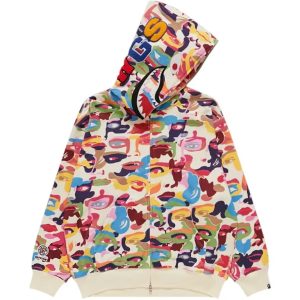
The hoodie that started a culture
There is a reason the BAPE hoodie has been on waitlists since 2004 and is still selling for multiples of retail on the secondary market today. It is not just the graphics — it is the construction. BAPE builds its hoodies on a heavyweight cotton French terry base, typically sitting between 380–420 gsm depending on the season. That is noticeably thicker than most streetwear hoodies on the market, which is why a BAPE piece feels substantial the moment you hold it. The weight gives it structure. The structure is what makes the shark face sit cleanly on the hood instead of bunching when you zip up. Every detail on this hoodie is deliberate.
Which BAPE hoodie should you buy?
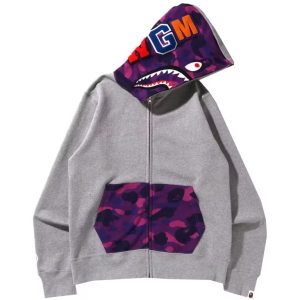
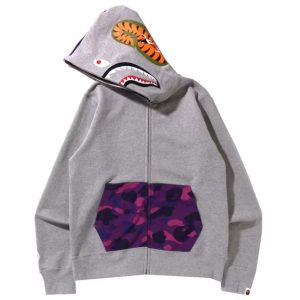
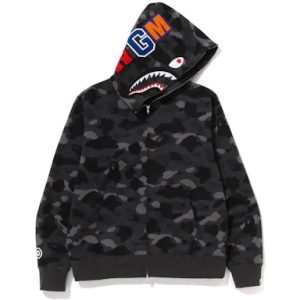
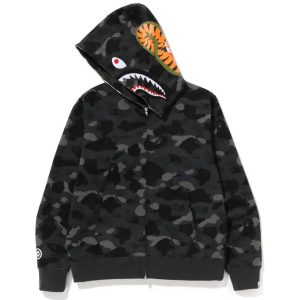
The shark full-zip hoodie
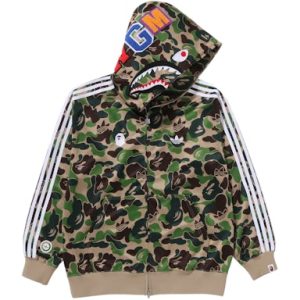
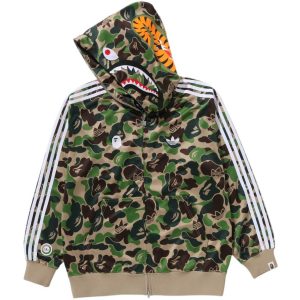
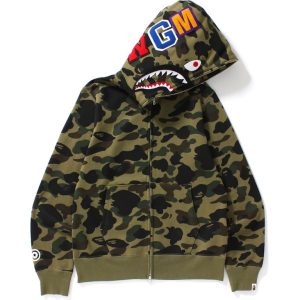
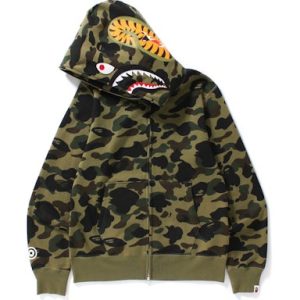
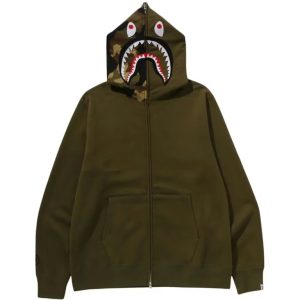
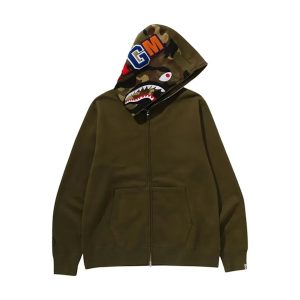
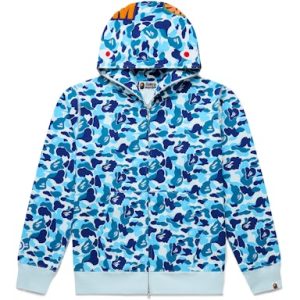
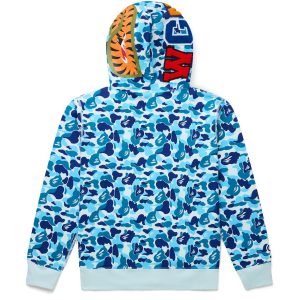
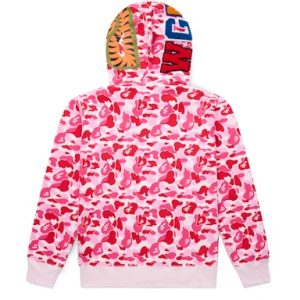
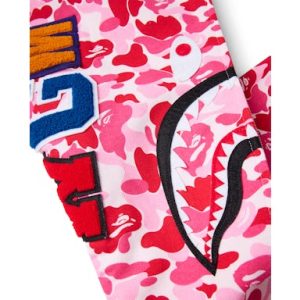
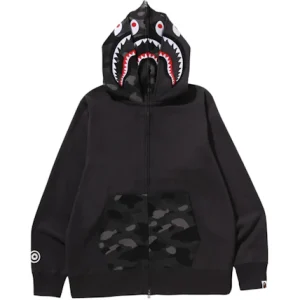
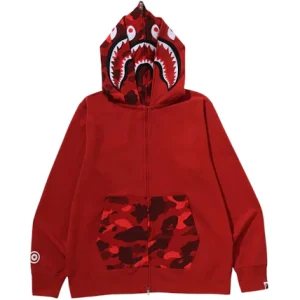
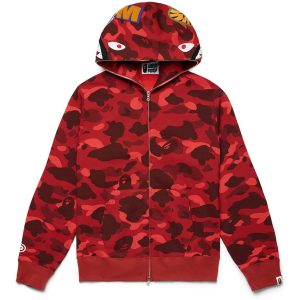
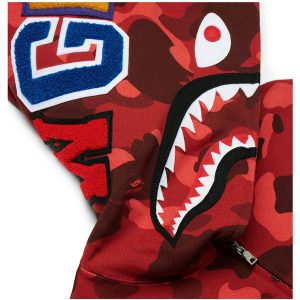
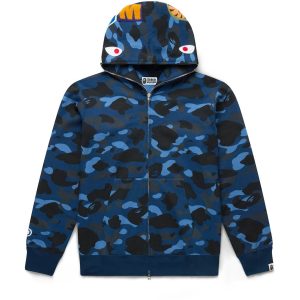
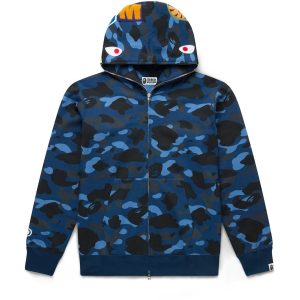
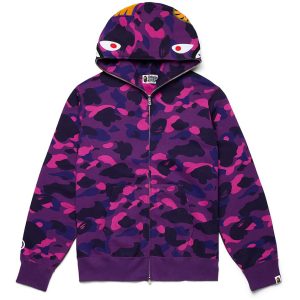
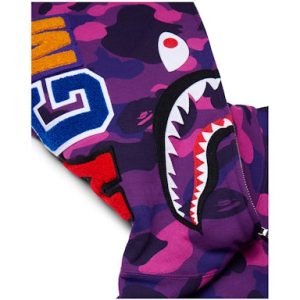
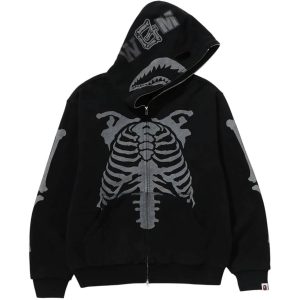
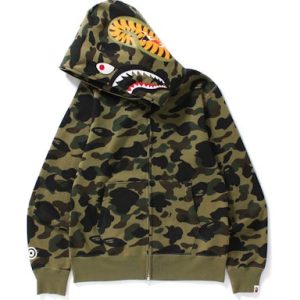
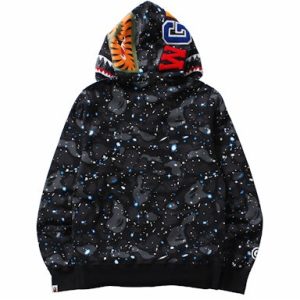
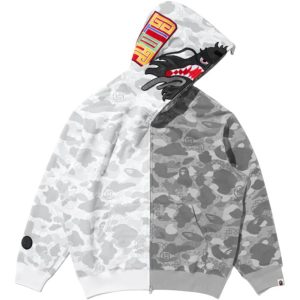
This is the one. If you are buying your first BAPE hoodie, this is where you start. The shark face graphic runs from chest to hood — when zipped all the way up, the hood closes over your face like a shark mouth, which is either the best or most extra thing in streetwear depending on who you ask. Available in the brand's 1ST CAMO print and in solid colorways. The zip-up construction means it layers well over a heavyweight tee or under an outer shell in colder months. Go for the camo version if you want it to hold resale value. Go for a solid black or navy if you want something you can actually wear on rotation without it taking over every outfit.
The pullover hoodie
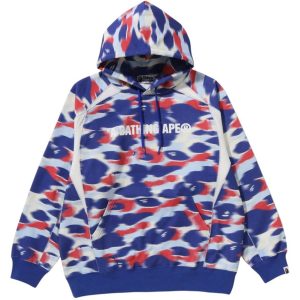
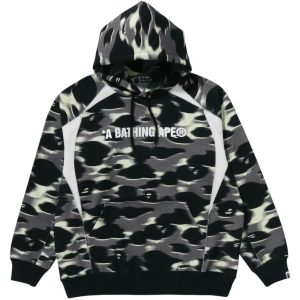
Less theatrical than the shark, but this is the one that gets the most daily wear. The Ape Head logo sits on the chest — clean, minimal, immediately recognizable to anyone who follows streetwear without shouting at everyone else. The pullover silhouette is relaxed through the body with a slightly dropped shoulder, which is exactly what you want when you are wearing it over a tee or layering it under a heavier jacket. The ribbed hem and cuffs hold their shape well even after repeated washing, which is a genuine construction detail worth noting — cheaper hoodies lose their rib tension after six months.
The collab hoodie
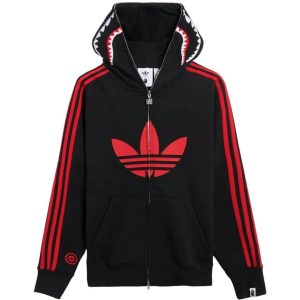
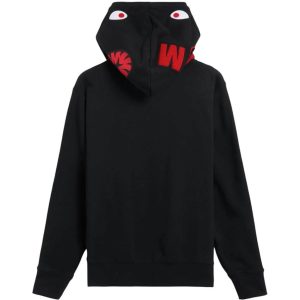
BAPE's collaboration pieces — with Travis Scott, Pharrell's Billionaire Boys Club, adidas, and others — use the same base construction but often introduce different fabric treatments, co-branded graphics, and limited colorways. These carry the strongest resale upside but are also the hardest to style casually because the graphics are louder. If you are buying a collab piece to wear, pair it with something deliberately simple — plain cargo pants, clean white sneakers, nothing competing for attention. If you are buying it to hold, store it unworn in a sealed bag away from direct light.
Sizing — the one thing every first-time buyer gets wrong
BAPE hoodies are cut to Japanese sizing standards, which run roughly one to two sizes smaller than US or EU sizing. This is not a flaw — it is how the brand was designed. Japanese streetwear in the 90s and early 2000s was built around a fitted silhouette, and BAPE has never deviated from that original block. What this means practically: if you are a medium in most Western brands, you need a large in BAPE for a regular fit, or an XL if you want the relaxed oversized drape that looks best with the brand's bolder graphics.
The French terry fabric also has around 8–10% post-wash shrinkage on first wash, especially if you tumble dry. Size with that in mind. If you are between sizes, go up — you cannot stretch a shrunken hoodie back.
One more detail worth knowing: the shark full-zip hoodie runs slightly longer in the body than the pullover, which is useful if you are tall or prefer your hoodies to sit below the hip.
How to wear a BAPE hoodie
The mistake most people make is trying to match the hoodie. You do not match BAPE — you anchor it. The camo and graphic prints are doing all the work visually. Your job is to let them. A classic BAPE hoodie outfit that actually works: black or navy cargo pants or straight-leg jeans, clean white or black sneakers (Air Force 1s, Jordans, or Bapestas if you want to stay in brand), and nothing else competing above the waist. If you are wearing the shark zip-up, leave it unzipped so the shark face is visible on the chest — fully zipped looks great for photos but reads awkward in motion.
Layering works well in cooler weather. The dropped shoulder on most BAPE hoodies sits cleanly under a bomber or coach jacket without creating bulk at the shoulders. Avoid thick-padded or technical outerwear over a BAPE hoodie — the graphics get lost and the silhouette becomes shapeless. Stick with something structured and relatively flat: a coach jacket, a varsity, or an unlined field jacket.
Care — how to keep it looking new
Cold wash, inside out, gentle cycle. This protects both the graphic print and the French terry pile. Hang dry whenever possible — the heavyweight cotton holds shape better air-dried than tumble dried, and you avoid the shrinkage issue mentioned above. Do not iron directly over any printed or embroidered areas. If the hoodie develops any pilling on the body after several washes, a fabric shaver brings it back to new in under five minutes — this is normal with French terry and not a sign of poor quality.
Frequently Asked Questions
Do BAPE hoodies run small?
Yes. BAPE hoodies are cut to Japanese sizing and run one to two sizes smaller than Western brands. Size up at least one size for a regular fit. For the classic oversized streetwear silhouette, size up two.
What fabric are BAPE hoodies made from?
Most BAPE hoodies are built on heavyweight 100% cotton French terry, typically 380–420 gsm. This is thicker and more structured than most comparable streetwear hoodies, which is why they hold their shape well and feel premium from the first wear.
What is the difference between a BAPE shark hoodie and a regular BAPE hoodie?
The shark hoodie is a full-zip style where the hood closes over the face to reveal a shark mouth graphic. It is the brand's most iconic silhouette. The regular BAPE hoodie is a pullover with a cleaner, less theatrical look — better for everyday wear, easier to style, and still instantly recognizable by the Ape Head logo on the chest.
Are BAPE hoodies worth the price?
For the construction quality and cultural weight, yes. The heavyweight French terry, the attention to detail on the graphics, and the brand's 30-year track record make it a legitimate buy at full price. On the secondary market, camo and collab pieces have historically held or grown in value — which is unusual for streetwear at this price point.